Human Foods Boxers Should Never Eat
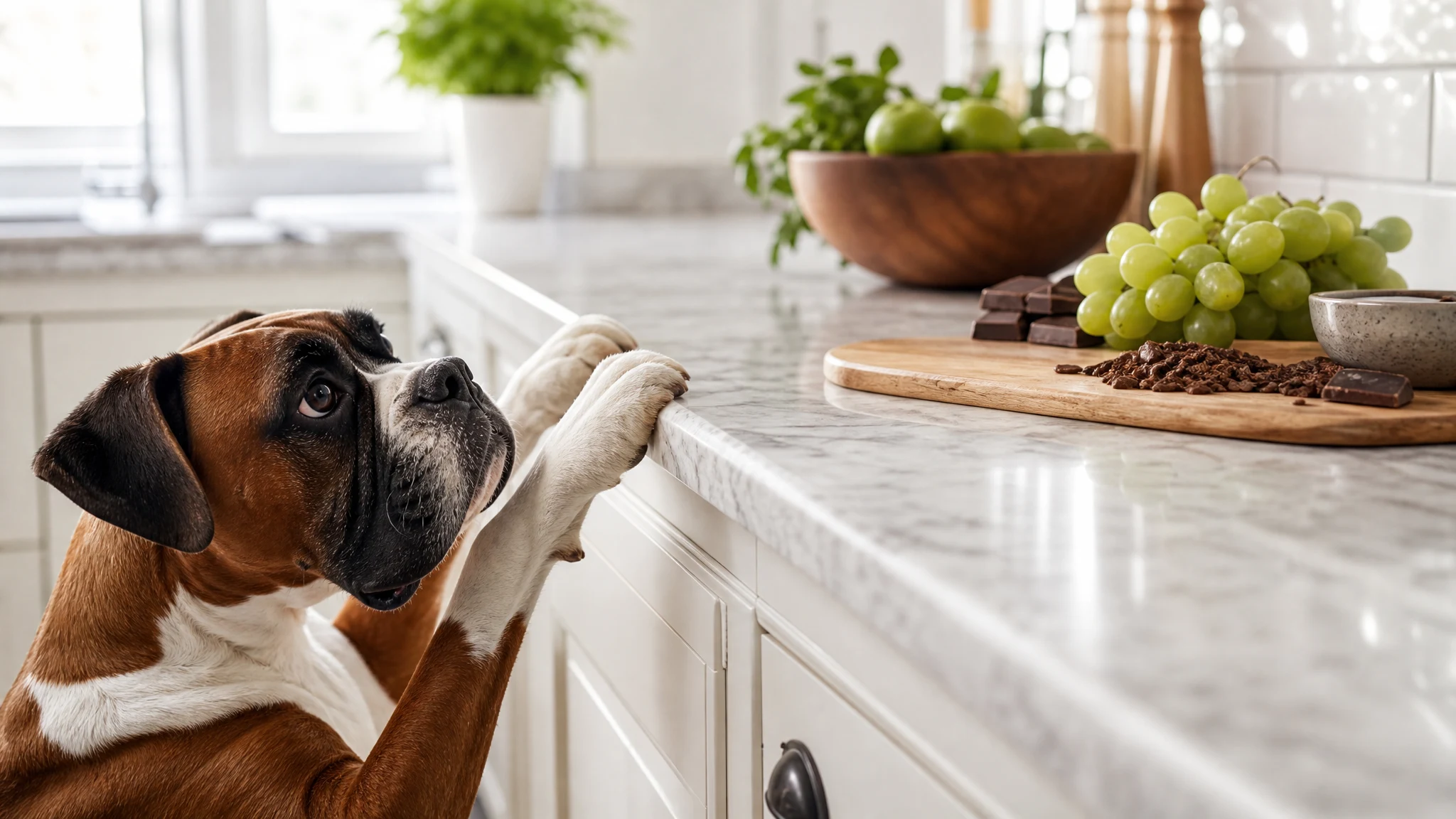
General nutrition information compiled from product labels and published sources, not veterinary advice. Your veterinarian is the right person to choose a diet for your dog, especially one with a health condition.
Boxers are medium dogs, about 65 to 80 pounds according to the PetMD Boxer breed page, and they are famously good at begging. That makes it worth knowing which kitchen foods are risky before one lands on the floor.
The toxic foods below follow the ASPCA Animal Poison Control list of foods that are unsafe for dogs. The questions are grouped by theme. This page does not give amounts or doses, because the risk depends on the individual dog and the situation. A veterinarian decides that.
The basics
What can Boxers not eat?
The ASPCA Animal Poison Control list names chocolate, grapes and raisins, xylitol, onions and garlic, macadamia nuts, and alcohol, among others. Those are the ones to keep in mind first. The list is not complete, so when you are unsure about a food, ask your veterinarian before sharing it.
Why are some human foods dangerous for dogs?
Dogs process some substances differently from people. A food that is harmless to you can damage a dog's blood cells, kidneys, liver or nervous system. The ASPCA list exists because these problems are well recognized.
Are human foods dangerous for Boxers specifically?
The sources we relied on do not describe a Boxer-specific toxic food list. The ASPCA list applies to dogs in general, and that includes Boxers. Your veterinarian can advise on anything particular to your dog's health.
Sweets and treats
Can Boxers eat chocolate?
No. Chocolate is on the ASPCA list of foods unsafe for dogs. Cocoa products, baked goods that contain them, and candy should all be kept out of reach.
Is xylitol really that serious?
Yes. The ASPCA lists xylitol, a sweetener found in some sugar-free gum, candy, baked goods and other products. Read ingredient labels on sugar-free items, and never share them with your dog.
What about peanut butter?
Peanut butter is a common treat, but check the ingredient label first. If xylitol is listed, do not give it to your dog. If the label is unclear, skip it or ask your veterinarian.
Can Boxers have ice cream or other dairy?
Ice cream is a poor choice. It is often sweet and rich, and some flavors contain chocolate or other risky ingredients. Some dogs also get an upset stomach from dairy, so ask your veterinarian before offering any.
Fruits, nuts and vegetables
Can Boxers eat grapes or raisins?
No. Grapes and raisins are on the ASPCA list. This includes raisins hidden in cookies, trail mix and cereal.
Are onions and garlic harmful?
The ASPCA lists onions and garlic as unsafe for dogs. That covers raw, cooked and powdered forms, so be careful with leftovers, soups and seasoned meats. A bite of seasoned table food can contain more than you think.
Are macadamia nuts a problem?
Yes, macadamia nuts are on the ASPCA list. Keep cookies and snack mixes that contain them out of reach. Other nuts can also be hard to digest or come heavily salted, so ask your veterinarian before sharing any.
What about avocado, and fruit pits and seeds?
The ASPCA advises caution with avocado, and fruit pits and cores can cause choking or blockages. Boxers tend to gulp, so remove pits and seeds from any fruit you share. When in doubt, check with your veterinarian.
Drinks, bones and kitchen hazards
Can Boxers have alcohol?
No. Alcohol is on the ASPCA list. Keep open glasses, cocktails and anything made with alcohol, including some raw dough, away from your dog.
What about coffee, tea and caffeine?
Caffeine products are also on the ASPCA list of things dogs should not have. This includes coffee grounds, tea bags and energy drinks. Dispose of them where a curious dog cannot reach.
Are cooked bones safe?
Not as a rule. Bones can splinter, cause choking, or block the digestive tract. Skip them and ask your veterinarian about safer chews.
Is fatty table food or salty food okay?
Rich scraps, fat trimmings and very salty foods are a bad habit. They can upset the stomach and add calories fast. The PetMD Boxer breed page also lists excess weight as a concern for the breed, so scraps are not a harmless extra.
Safe snacks and feeding habits
Can Boxers eat fruits and vegetables?
Many dogs do well with a small piece of plain, dog-safe produce such as carrot or apple without seeds. Ask your veterinarian which ones suit your dog, and introduce any new food slowly. Keep treats small so they do not crowd out the balanced diet in the bowl.
What are good treat options?
Plain cooked chicken with no seasoning, onion or garlic is a common choice. A few pieces of your dog's regular kibble also work well as training rewards. Reward-based training pairs well with small treats, and the food you choose should be plain.
Does feeding schedule matter when sharing food?
It can. The PetMD Boxer breed page advises two meals a day about 12 hours apart, no raised food bowls, and slow feeder bowls, in connection with bloat. Treats should fit around that routine and not replace it. Ask your veterinarian what is right for your dog.
If your Boxer eats something unsafe
What should I do right away?
Call your veterinarian or the ASPCA Animal Poison Control Center. Have the product label or packaging ready, and be able to tell them what your dog ate and when. Do not wait for symptoms to appear.
Should I make my dog vomit?
Only if a veterinarian or poison control tells you to. Doing it on your own can make some situations worse. Follow the professional's directions for your dog.
How do I find the right phone number?
Look up the current contact details on the ASPCA website, and keep your veterinarian's and an emergency clinic's numbers saved in your phone. Check them now, before you need them. The ASPCA service may charge a fee, so confirm with them directly.
Sources
- PetMD Boxer breed page
- ASPCA Animal Poison Control, list of foods that are unsafe for dogs (check the ASPCA website for the current list)