Boxer Allergy Symptoms and the Diets Vets Recommend Testing
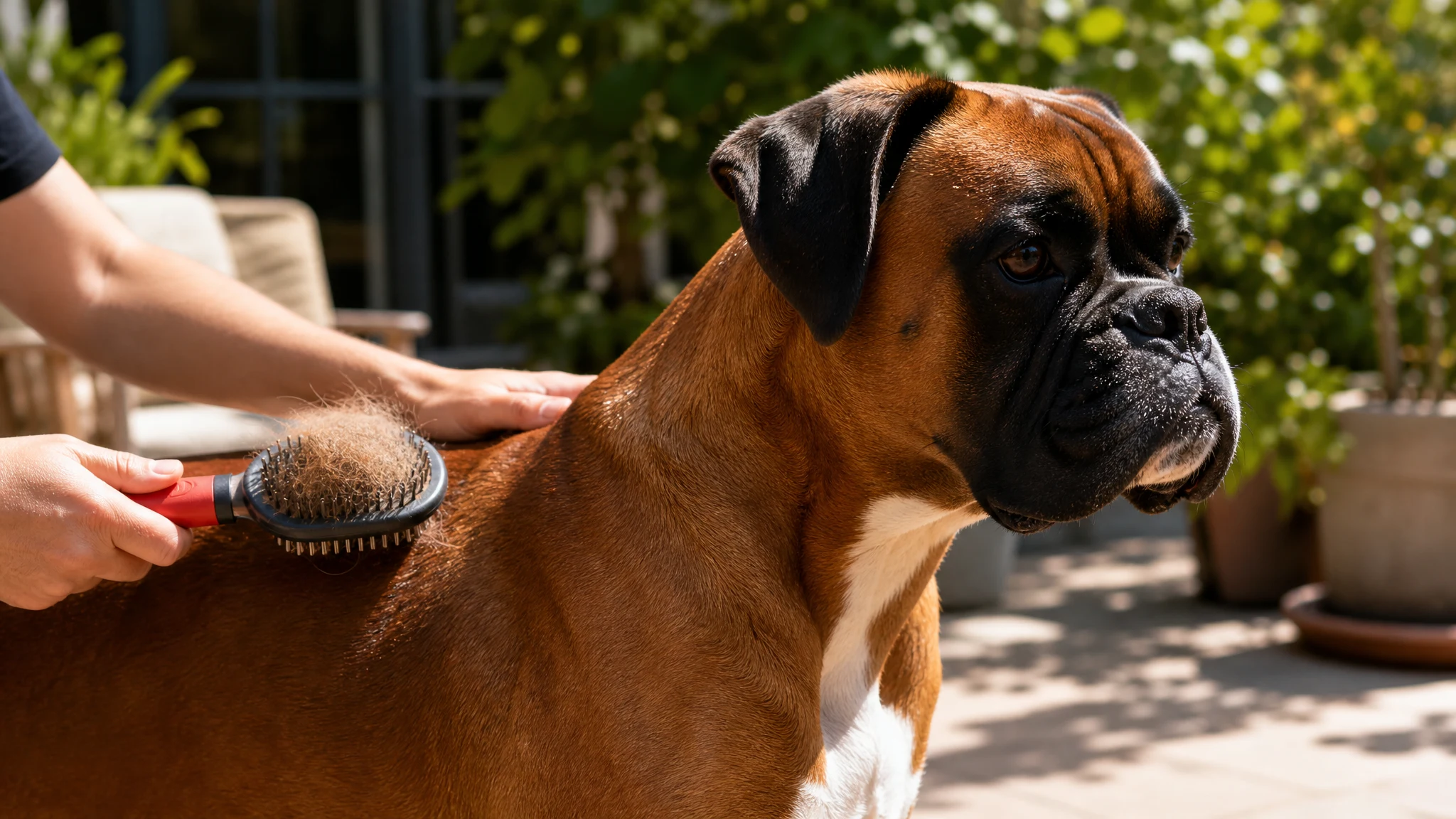
General nutrition information compiled from product labels and published sources, not veterinary advice. Your veterinarian is the right person to choose a diet for your dog, especially one with a health condition.
If your Boxer itches, chews at their paws or has repeat ear trouble, food is one possible cause among several. This guide walks through what to note, what to bring to the vet, and how a food trial is usually organized. It also explains how to read labels when you hunt for the best food for boxers with allergies.
One caution first. No food is proven to prevent or cure an allergy, and only a veterinarian can say what is behind your dog's symptoms.
What this guide covers
The Boxer is a medium dog, about 65 to 80 pounds and 21 to 25 inches tall, with a life expectancy of 10 to 12 years, according to the PetMD Boxer breed page. The sources we relied on do not give Boxer-specific numbers for food allergy rates. We will not guess at them. If you want breed-level data, ask your veterinarian or check the American Boxer Club health page.
For the wider picture of feeding this breed, see our guide to the diet factors that matter for Boxers.
Materials you will need
- A notebook or phone notes for a daily symptom and food log.
- Photos of any skin redness, hair loss or ear problems, with dates.
- The full labels or packaging of everything your dog eats now: food, treats, chews, dental sticks, flavored medication.
- A kitchen scale or measuring cup, so portions stay the same from day to day.
- A slow feeder bowl, since the PetMD Boxer page recommends one for bloat risk.
- An appointment with your veterinarian before you change anything.
Common symptoms to record
Owners and veterinarians often look at the same short list. None of these point to a food allergy on their own.
- Itching, licking or chewing at paws, belly, armpits or face.
- Red or inflamed skin, hot spots or recurring skin infections.
- Ear scratching, head shaking, or ears that are red, smelly or waxy.
- Loose stools, vomiting or frequent gas.
Many causes can look alike, including fleas, environmental triggers, infections and other medical problems. That is why a vet visit comes before a diet change. Sudden swelling of the face, trouble breathing or repeated vomiting needs prompt veterinary care, not a food experiment.
Step-by-step: preparing for a diet trial
Step 1. Book a veterinary exam first
Ask your vet to rule out fleas, skin infection, ear infection and other causes. Your vet can also tell you whether a food trial makes sense for your dog and which type to use. Some trials use a prescription diet, and those are something only a veterinarian prescribes.
Step 2. Write down the current diet
List every protein, grain and treat your dog eats. Include table scraps and anything used to hide pills. Hidden ingredients are one of the most common reasons a trial gets muddy.
Step 3. Start a symptom log
Rate itching, ear problems and stool quality each day on a simple scale you choose, such as 0 to 3. Keep it going for a week or two before you change anything. This gives you a baseline to compare against.
Step 4. Let your vet pick the trial diet
Veterinarians commonly suggest a diet built around a protein your dog has not eaten before, or a prescription diet made for this purpose. Which one fits depends on your dog's history. Ask your vet how long the trial should run and what counts as a break in it. Do not pick a trial food from a store shelf on your own, because the usual retail label claims do not guarantee the food is suitable for a trial.
Step 5. Switch gradually, then hold steady
Brand pages we reviewed describe transitions of 7 to 10 days. Check your vet's plan and the chosen food's own label. After the switch, feed only the trial food and water. No treats, flavored chews or table food unless your vet approves them.
Step 6. Feed measured portions on a Boxer-friendly schedule
Use the label's feeding guide as a starting point, then adjust with your vet to keep a lean body condition. The PetMD Boxer page lists excess weight and joint strain as a concern. It also advises two meals a day about 12 hours apart, no raised food bowls, and slow feeder bowls to help with bloat risk.
Step 7. Review the log with your vet
At the end of the trial, compare your notes with the baseline. Your vet may then suggest reintroducing a former ingredient to see whether signs return. Do this only under their direction.
How to read labels while you plan
Once your vet has said what to avoid, labels are where you check for it. Look at three things.
- The ingredient list. Names are listed in order of weight. Watch for "meal," "by-product meal" and "fat," which can come from the same animal as the protein named up front.
- The AAFCO statement. It tells you the life stage the food is formulated for. Per Whole Dog Journal's explanation of nutritional adequacy statements, foods for growth or all life stages must say whether they cover growth of large-size dogs (70 pounds or more as an adult), using the words "including" or "except for."
- The brand's own page. Ask the brand directly about ingredient sourcing and shared manufacturing lines. We did not find that information in the sources we used.
A label comparison, not a ranking
We compared label data published by the brands. We did not run feeding trials or taste tests, and we cannot say any of these foods works for an allergic dog. The table shows the first five ingredients each brand lists, to show how to read a list.
| Food | First five listed ingredients |
|---|---|
| Royal Canin Boxer Adult | Brown rice, brewers rice, chicken fat, chicken by-product meal, oat groats |
| Hill's Science Diet Adult Large Breed Chicken & Barley | Chicken, cracked pearled barley, brown rice, brewers rice, whole grain wheat |
| VICTOR Elite Canine | Chicken meal, whole grain brown rice, grain sorghum, peas, chicken fat |
| Freshpet Home Cooked Chicken Recipe | Chicken, eggs, cranberries, carrots, ground oats |
Notice the pattern. Each of these four lists chicken or a chicken-derived ingredient in its first five. If your vet tells you to avoid chicken, all four would need a closer look at the full label, and some would be out. None of these pages describes the food as a limited-ingredient or elimination diet, so do not treat them as one.
Tips and common mistakes
- Do not rotate foods during a trial. Changing the food every few days makes it impossible to tell what helped or hurt.
- Do not forget treats. A single flavored chew can undo weeks of careful feeding.
- Do not assume "grain-free" means allergy-friendly. The foods in the table above are all labeled grain-free: false, and a grain-free label says nothing about whether it fits your dog.
- Mind the heart. The PetMD Boxer page notes the breed's heart condition, ARVC (Boxer cardiomyopathy), and gives no diet cure for it. Separately, the FDA says it has not found a definitive diet link to non-hereditary dilated cardiomyopathy (DCM) and has not asked for any recalls. It counted 1,382 DCM reports from January 1, 2014 to November 1, 2022. Ask your vet before choosing an unusual diet for a Boxer.
- Do not use a puppy trial food without checking the label. A Boxer puppy can be fed a food whose label says "including growth of large-size dogs." Boxers sit near the 70 pound cutoff, so ask your vet. Do not use an "except for" food for a growing puppy without that conversation.
- Do not add supplements on your own. Ask your vet before giving anything extra.
What results to expect
Results vary by dog. Some owners and veterinarians see skin or stool signs improve over a trial. Others find the trial points to a different cause, such as environmental allergies, which a food change would not address. A food trial can help narrow down possible causes. It cannot promise an outcome.
If your Boxer improves, that is a reason to talk with your vet about a long-term plan, not proof that one ingredient is the culprit. If nothing changes, the log you kept is still useful to the next step of the workup.
Quick checklist
- Vet exam first.
- Log baseline symptoms.
- Let your vet choose the trial diet.
- Transition gradually, then feed nothing else.
- Measure portions and keep meals on schedule.
- Review the results with your vet.
The best food for boxers with allergies is the one your veterinarian helps you identify through a careful, documented trial. Labels help you carry out that plan, but they do not replace it.
Sources
- PetMD, Boxer breed page
- American Boxer Club, health page
- FDA CVM, Questions and Answers: FDA's Work on Potential Causes of Non-Hereditary DCM in Dogs
- Whole Dog Journal, In the Fine Print: Nutritional Adequacy Statements
- Royal Canin, Boxer Adult product page
- Hill's Pet Nutrition, Adult Large Breed product page
- VICTOR Pet Food, Elite Canine product page
- Freshpet, Home Cooked Chicken Recipe product page