Can Boxers Eat Pumpkin? What Vets Say About This Common Treat
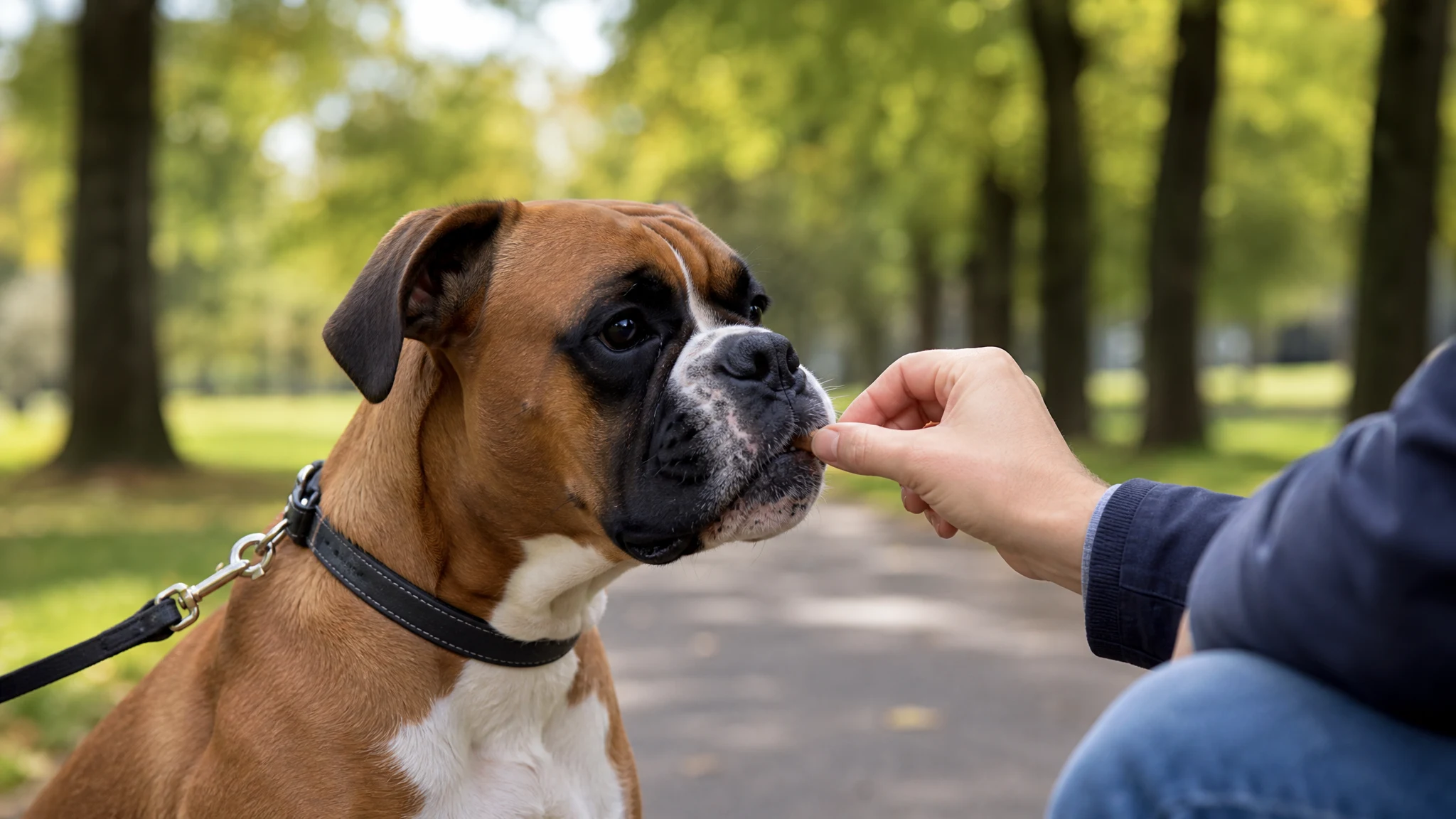
General nutrition information compiled from product labels and published sources, not veterinary advice. Your veterinarian is the right person to choose a diet for your dog, especially one with a health condition.
Pumpkin comes up often when owners talk about treats. So, can Boxer dogs eat pumpkin? Plain pumpkin is something many owners offer. But none of the breed sources we relied on give Boxer-specific pumpkin advice, and none give an amount.
That means the sensible path is a small, plain, planned trial, with your veterinarian making the call for your individual dog. This guide walks through it step by step. It does not promise any result, and it does not treat pumpkin as a remedy for anything.
What the breed sources do and do not say
The PetMD Boxer breed page describes the Boxer as a medium dog, about 65-80 pounds, with a life expectancy of 10-12 years. It says Boxers need quality protein for healthy muscles, including the heart. It does not mention pumpkin.
The American Boxer Club health page covers conditions such as hip dysplasia and chronic kidney disease. On hip dysplasia it says other factors, such as diet and conditioning, cannot be ruled out, but it gives no specific diet advice. On kidney disease it gives no diet advice at all.
So there is no breed source here saying pumpkin helps or harms a Boxer. Anything beyond "offer a little, plain, and ask your vet" would be guesswork, and we will not pretend otherwise. For the bigger picture of what shapes a Boxer's bowl, see our guide to Boxer nutrition and the diet factors that matter for this breed.
Materials you need
- Plain pumpkin only. That means plain cooked pumpkin or canned pumpkin whose ingredient list is just pumpkin.
- A clean spoon and a small bowl for portioning.
- Your dog's regular complete food, which stays the main meal.
- A slow feeder bowl, if your Boxer gulps. PetMD advises slow feeder bowls for Boxers because of bloat (GDV) risk.
- A notebook or phone note to record what you offered and how your dog did.
- Your veterinarian's contact details for the amount question.
Step-by-step: offering pumpkin to a Boxer
Step 1: Ask your veterinarian first
This is the step that matters most. A veterinarian knows your dog's weight, age, history and current food. They can tell you whether pumpkin makes sense and how much.
We are not giving an amount here. No source we relied on provides a Boxer pumpkin portion, and made-up numbers would not be fair to you or your dog. This is especially important if your dog has a health condition, a sensitive stomach, or is on a veterinary diet.
Step 2: Read the label like you would a dog food label
Canned products can look alike on the shelf. Turn the can over and read the ingredients.
- You want an ingredient list that is only pumpkin.
- Pie filling is a different product. It can contain sugar and spices, which have no place in a dog's treat.
- If you are unsure what an ingredient is, skip the product or ask your vet.
Marketing words like "natural" or "wholesome" tell you little. The ingredient list tells you more.
Step 3: Keep it plain
Serve pumpkin without salt, butter, sugar, spices or sauces. If you cook fresh pumpkin yourself, cook it until soft and let it cool. Do not feed raw chunks, rind or stem. Remove seeds and stringy parts, and mash or puree the flesh.
Step 4: Start small, as your vet advises
Offer the first serving at the size your veterinarian suggests. Give it on its own day, not alongside other new foods. If something upsets your dog's stomach, you will know the cause.
Step 5: Think about how it is served
PetMD advises two meals a day about 12 hours apart, no raised food bowls, and slow feeder bowls to reduce bloat risk. Following that, it is reasonable to mix a small portion of pumpkin into a regular meal in a slow feeder instead of handing out a large bonus serving at an odd time.
Pumpkin does not prevent bloat. This is only about keeping your Boxer's feeding routine in line with what PetMD advises.
Step 6: Count it as part of the day's food
Treats add calories on top of meals. Excess weight and joint strain are both flagged on the PetMD Boxer page as diet-relevant issues. Food labels give a starting point for daily amounts, and treats should fit inside the total, not sit on top of it.
For example, Royal Canin lists 335 kcal ME per cup, as fed (calculated), for its Boxer Adult dry dog food, and its page has feeding tables by weight and activity level. Ask your vet whether the meal portion should shrink slightly on days when treats are given.
Step 7: Watch and record
Over the next day or two, note appetite, stool and energy. If you see vomiting, diarrhea, or anything that worries you, stop the pumpkin and call your veterinarian. Bring your notes.
Special cases to raise with your vet
Puppies. The literature review in Tal et al. (Can Vet J, 2018) links excess energy during growth to rapid growth and developmental orthopedic disease in large-breed puppies. A Boxer is close to the AAFCO large-size cutoff of 70 pounds as an adult, with males at 65-80 pounds per PetMD. So extra treats matter for a growing Boxer. The same review found no Boxer-specific calcium guidance. Ask your vet how treats fit into your puppy's plan.
Heart concerns. PetMD lists ARVC (Boxer cardiomyopathy) as a breed concern and gives no diet cure for it. The FDA says it has not found a definitive diet link to non-hereditary DCM. If your dog has a heart diagnosis, any change in treats is a conversation for your veterinarian.
Dogs on a prescribed diet. Prescription diets are something only a veterinarian prescribes. Adding extras can change the plan, so check first.
Tips
- Keep portions consistent. Do not let family members each add a spoonful.
- Introduce one new food at a time.
- Store opened canned pumpkin covered in the refrigerator, and follow the storage directions on the label.
- If your Boxer eats fast, use the slow feeder even for small add-ins.
Common mistakes to avoid
- Buying pie filling by accident. Check the ingredient list, not just the picture on the can.
- Guessing the amount. Use what your vet tells you.
- Treating pumpkin as medicine. No source here says pumpkin treats, prevents or cures any condition.
- Letting treats crowd out the main food. A complete food label statement from AAFCO describes the meal, not the extras.
- Starting several new foods at once. You will not be able to tell what caused a reaction.
Expected results
Many dogs simply accept a little plain pumpkin as a tasty add-in, and some owners report their dogs enjoy it. That is the realistic expectation. Results vary from dog to dog, and some dogs may have a loose stool or an upset stomach after a new food.
Pumpkin is not a substitute for a complete and balanced diet, and it should not be expected to change a health condition. If your Boxer has ongoing digestive problems, weight concerns or joint issues, a veterinarian is the right person to sort out the cause.
Bottom line
Plain pumpkin, in an amount your vet approves, is a reasonable thing to ask about for a Boxer. The breed sources we relied on are silent on pumpkin, so we leave the specifics to your veterinarian. Read the label, keep it plain, count the calories, and watch how your dog responds.