Yogurt for Boxers: Benefits, Risks and How Much Is Too Much
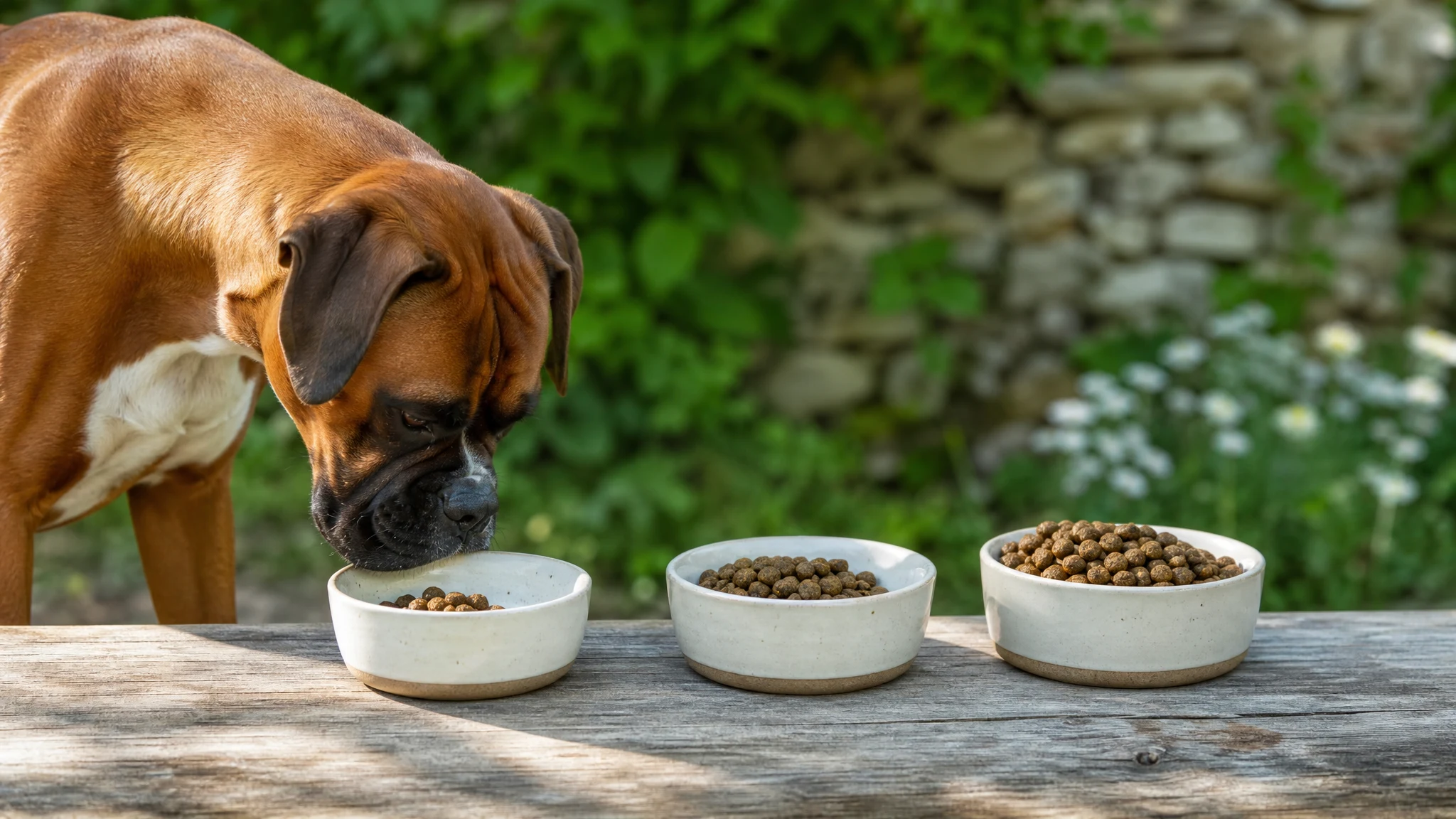
General nutrition information compiled from product labels and published sources, not veterinary advice. Your veterinarian is the right person to choose a diet for your dog, especially one with a health condition.
Many Boxer owners ask whether can boxer dogs eat yogurt as an occasional treat. The short answer is that some healthy dogs tolerate a small spoonful. Whether it suits your dog is a question for your veterinarian.
No Boxer-specific yogurt guidance turned up in the breed sources we read. So this guide does not give a magic number. It shows how to read a yogurt label, how to introduce a new food carefully, and how to keep a treat from throwing off a Boxer's daily diet.
Our method is simple. We looked at published breed information and product label data. We did not feed any yogurt to dogs or run taste tests.
What to know before you start
Yogurt is a treat, not a meal. The Boxer breed page at PetMD describes a medium-sized dog of about 65 to 80 pounds, with a life expectancy of 10 to 12 years. PetMD also lists excess weight and the joint strain that comes with it as a concern for the breed. Extra calories from treats add up quickly in a dog this size.
PetMD also notes that Boxers need quality protein for healthy muscles, including the heart. Yogurt does not replace a complete and balanced dog food, and it should never crowd one out.
For the wider picture of what matters in a Boxer's bowl, see our guide to the diet factors that matter for this breed.
Materials and ingredients needed
- A plain yogurt with a short ingredient list. Read the whole label, not just the front.
- A measuring spoon, so the portion is a known amount and not a guess.
- Your dog's regular food label and feeding guide, to see how much of the day's calories a treat might take up.
- A notebook or phone note to record the date, the amount and how your dog does afterward.
- Your veterinarian's phone number, in case something seems off.
Step-by-step: how to introduce yogurt to a Boxer
Step 1: Ask your veterinarian first
Start here, especially if your Boxer has a sensitive stomach, a history of food reactions, a weight problem or a heart diagnosis. The American Boxer Club health page and PetMD both discuss conditions that affect the breed, including ARVC (Boxer cardiomyopathy). Neither source gives a diet that treats or prevents these conditions. Only a veterinarian can say whether a new food fits your individual dog.
Step 2: Read the yogurt label
Look at the ingredient list before anything else. Marketing words such as "natural" or "wholesome" do not tell you what is inside.
- Choose plain over flavored. Flavored yogurts often add sugar, fruit preparations or other extras.
- Check for sweeteners of any kind, including artificial ones. Ask your veterinarian which sweeteners to avoid.
- Watch for add-ins such as chocolate pieces, nuts, granola or flavorings.
- Compare the calories per serving with what your dog already eats.
Step 3: Work out where the calories come from
Dog food labels list calories per cup, which makes this easy to check. For example, Royal Canin's page for its Boxer Adult dry food lists 335 kcal ME per cup, as fed. Hill's Science Diet Adult Large Breed lists 365 kcal per cup. Look at your own food's label for the number that applies to your dog.
A treat is extra energy on top of the meals. If you add yogurt regularly, ask your veterinarian whether to trim the regular food slightly so the total stays steady. Feeding guides on dog food labels are starting points, and your dog's body condition tells you whether to adjust.
Step 4: Start with a very small taste
Offer a small amount on one day, and nothing else new that day. Introducing one new food at a time makes it clear what caused any change. Because no source we reviewed sets a Boxer-specific portion, ask your veterinarian what a small first taste should be for your dog's weight.
Step 5: Serve it safely
Bloat, also called GDV, is a serious concern in Boxers. PetMD advises two meals a day about 12 hours apart, no raised food bowls, and slow feeder bowls. Follow the same habits with treats.
- Offer yogurt from a spoon or a shallow dish at a calm time, not right before or after hard exercise.
- Do not let your dog gulp it down. A slow, quiet serving is better than a rush.
- Do not use a raised bowl.
PetMD does not say yogurt causes or prevents bloat. These are general feeding habits for the breed.
Step 6: Watch and record
Over the next day or so, note your dog's stool, appetite, energy and any itching or discomfort. Write it down. If anything looks wrong, stop the yogurt and call your veterinarian. Do not keep offering it to see whether the problem goes away.
Step 7: Decide on a routine with your vet
If your dog does well and your veterinarian agrees, choose a fixed small portion and an occasional schedule. Keeping it consistent makes it easy to count the calories and to spot a change.
How much is too much?
We can't give you a number you can trust, and we won't make one up. No Boxer-specific yogurt portion appeared in the sources we reviewed, and a dog's size, age, activity level and health all change the answer. Your veterinarian can tell you a sensible amount for your Boxer.
A few signs it may be too much:
- Your dog is gaining weight, or you can no longer feel the ribs easily.
- Your dog eats less of the regular food because treats fill the gap.
- Stools change after yogurt, or your dog seems uncomfortable.
- Treats of all kinds, not only yogurt, now make up a large share of the day.
The idea is that the regular, complete food stays the main part of the diet. Yogurt should stay a small extra.
Tips and common mistakes to avoid
Tips
- Use yogurt as a small topper or a training reward, which keeps portions naturally small.
- Keep reward-based training in mind. A tiny lick of a favorite treat works well for rewarding calm behavior, and you can count it in the day's total.
- Check the label every time you buy a new tub. Recipes change.
- Keep your dog's body condition in view. PetMD flags excess weight and joint strain as a breed concern, so keep an eye on the waistline.
Common mistakes
- Buying flavored or sweetened yogurt. The extras are the part most likely to cause trouble.
- Skipping the label. A short front-of-pack claim tells you little.
- Offering a big bowl at once. A first taste should be small.
- Adding it without trimming anything. Extra calories every day can add up.
- Using yogurt as a health fix. No source we read says yogurt treats or prevents hip dysplasia, heart disease, allergies or bloat. The American Boxer Club health page gives no specific diet advice for hip dysplasia.
- Changing several foods at once. You lose track of what caused a reaction.
- Feeding yogurt to a puppy without asking. Growing dogs have their own needs. For example, a Boxer puppy can be fed a food whose label says "including growth of large-size dogs". Ask your veterinarian before adding extras to a growing dog's diet.
Expected results
If your veterinarian approves and your dog tolerates it, plain yogurt may simply be a small, enjoyable treat that adds variety to the day. Some owners find it useful as a reward. We can't promise any health benefit, and no source we reviewed links yogurt to one for Boxers.
Results vary from dog to dog. Some dogs do fine with a spoonful. Others may have loose stools or an upset stomach. If your dog has any reaction, stop and contact your veterinarian.
When to skip yogurt and call your vet
- Your dog has had food reactions or digestive trouble before.
- Your dog has a diagnosed heart condition, kidney disease or a weight problem.
- Your dog has a prescription diet. These diets are something only a veterinarian prescribes, so ask before adding anything.
- Your dog seems unwell after trying it, or you see repeated vomiting, a swollen belly or distress. Treat those as urgent and call a veterinarian right away.
The bottom line
So, can Boxer dogs eat yogurt? Some can, in small amounts, and only when the product is plain and the dog is healthy. It is a treat. A complete and balanced dog food with a proper AAFCO statement stays the foundation of the diet.
Read the label, count the calories, start small, keep the usual bloat-smart feeding habits, and let your veterinarian make the final call for your individual dog.